Top 5 Scams Targeting Credit Union Members Right Now—and How to Avoid Them
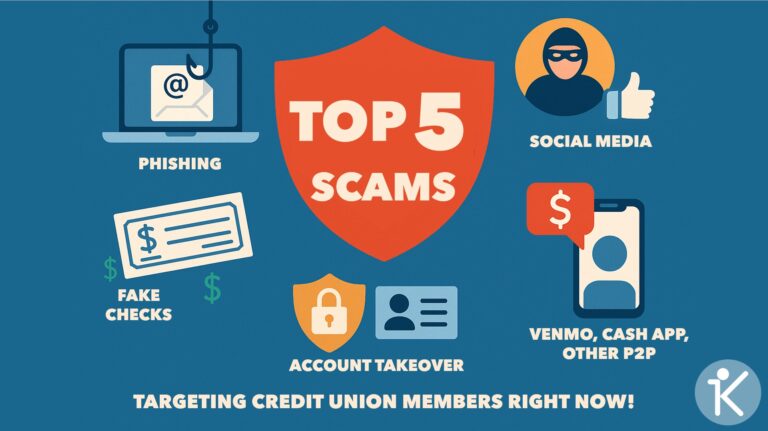
Scammers are constantly coming up with new ways to steal money and personal information—and unfortunately, credit union members are often prime targets. That’s why KEMBA is here to help you stay informed and one step ahead. Below are five common scams happening right now and, more importantly, how you can protect yourself from them.
Fake Bank Texts and Emails ("Phishing")
Scammers frequently send emails or texts that appear to be from KEMBA or another bank. These messages often claim that your account is locked or compromised, urging you to click a link to verify your information.
Watch for these red flags:
Misspelled words or strange grammar
Generic greetings like “Dear Customer”
Threats of urgent action or account suspension
Take action: Instead of clicking, contact KEMBA directly through our main line: 317-351-5235. Always go straight to the source when something feels off.
Venmo, CASH APP and other p2p Scams
Scammers also use P2P apps like Venmo and Cash App to trick people into sending money. Often, they pretend to be a buyer, seller—or even your bank. Example: You receive a text saying your account is at risk and you must “transfer” money to keep it safe. That’s a scam.
How to protect yourself:
Only send money to people you personally know
Remember: KEMBA will never ask you to transfer money for security reasons
Turn on transaction alerts in your mobile banking app
Job and Overpayment Scams
Another tactic involves fake jobs or “mystery shopper” offers. Scammers send you a check, then ask you to send a portion of the money back. Later, the check bounces—leaving you on the hook.
Red flags include:
Getting “hired” instantly without an interview
Being asked to buy gift cards or wire money
Being told to keep part of a check as a “bonus”
Stay safe: Always research job offers independently—especially if they involve handling checks or money.
Account Takeover Attempts
Some scammers try to gain access to your account by guessing your password or by tricking you into revealing your login credentials.
To prevent this:
Use strong, unique passwords for all accounts
Call us immediately if you receive a password reset notification that you didn’t request
Social Media Scams
Scammers are also active on Facebook, Instagram, and similar platforms. They often promote fake giveaways, impersonate friends, or push investment schemes.
Here’s what you can do:
Avoid clicking suspicious links or sharing personal information
We’ll help secure your account and guide you through next steps.
We're here to help!
If you ever have questions about a suspicious message or need help protecting your account, please reach out. Our team is here to support you and keep your financial information safe.
Not a member? Use this application to submit your loan request.
All loans are subject to credit approval and underwriting criteria. Membership with KEMBA is required. If you are a non member, applying for a loan will also initiate a membership application.

Sorry, the comment form is closed at this time.